If something goes wrong
Earthquakes & evacuation
Small earthquakes are common in Japan and buildings are built for them. If your phone sounds the Earthquake Early Warning (緊急地震速報, kinkyū jishin sokuhō), you have a few seconds: protect your head first. Aftershocks often follow, so stay alert after the first quake.
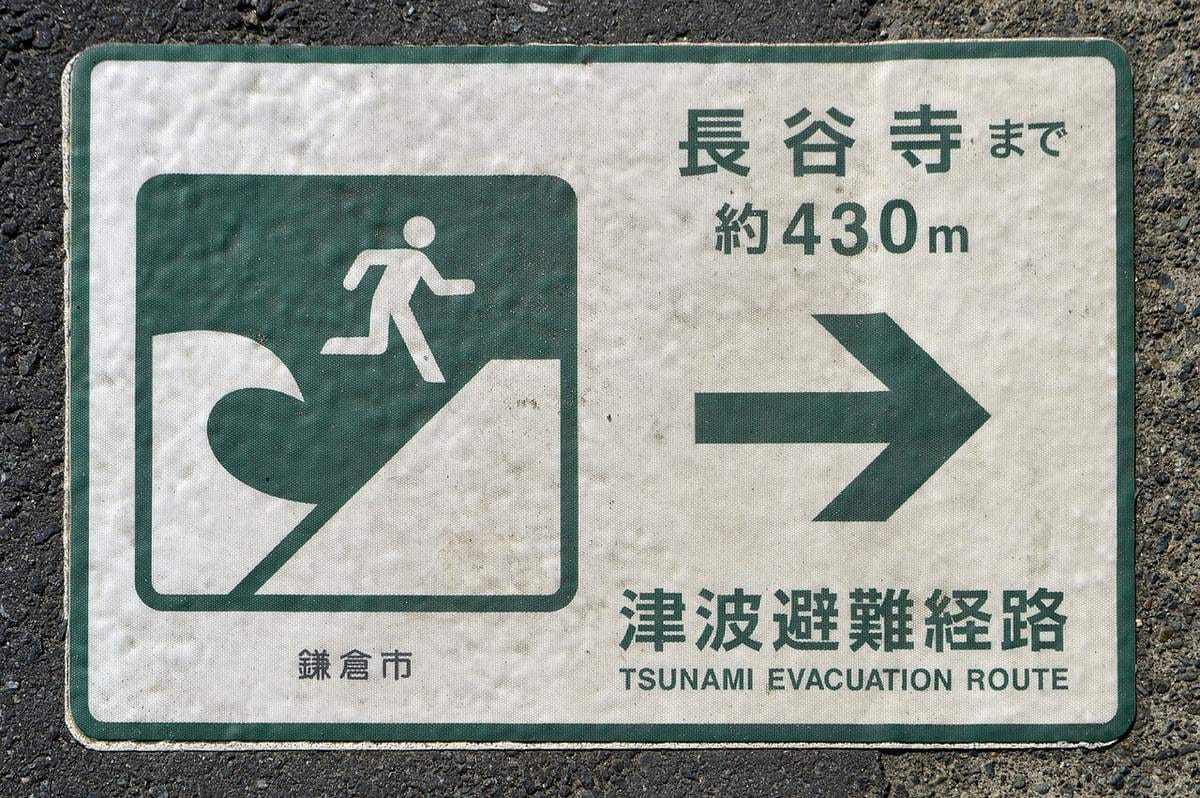
Photo: DimiTalen / Wikimedia Commons (CC0)
During the shaking
Step by step
Get under a sturdy table, or crouch and cover your head with your arms or a bag.
Stay away from windows, shelves and things that can fall.
Don't run outside. In a shop or station, follow staff instructions.
In a lift, press every floor button and get out at the first stop.
Common mistakes
- Rushing out of a building while glass and signs can fall.
- Using a lift after a big quake.
After the shaking
Step by step
Check yourself and others for injuries. Call 119 if someone is badly hurt.
Put on shoes — there may be broken glass.
Listen to staff and announcements. Check the Safety tips app for alerts in your language.
If told to evacuate, go to an evacuation area (避難場所, hinan basho) — use the map button below. Shelters where people can stay (避難所, hinanjo) open afterwards.
Common mistakes
- Phoning repeatedly — use messages so lines stay free for emergencies.
Near the sea or a river: tsunami
If the shaking is strong, or weak but long, near the coast — move to high ground or a tall, sturdy building at once. Don't wait for a warning.
Step by step
Go up and away from the water on foot: a hill, or the upper floors of a tall concrete building.
Follow signs for tsunami evacuation areas (津波避難場所) or tsunami evacuation buildings (津波避難ビル).
Stay there until the warning is lifted — later waves can be bigger.
Common mistakes
- Going to the shore to look at the sea.
Heavy rain, typhoons and alert levels
For storms, floods and landslides, Japan uses five alert levels. At Level 4, everyone in the danger area is told to evacuate. At Level 5 a disaster is already happening or about to — don't wait for it.
Step by step
Turn on emergency alerts on your phone and check the Safety tips app.
Ask the hotel staff where the nearest evacuation area is.
If Level 4 is announced for your area, go to the evacuation area — or, if going outside is already dangerous, move to an upper floor of a sturdy building.
Common mistakes
- Going out to look at a river or the sea during a storm.
Staying in touch after a disaster
Step by step
Look for the free Wi-Fi network 00000JAPAN — phone companies open it in large disasters. It isn't encrypted, so use it to get information, not to enter passwords.
Leave a message for family with the Disaster Emergency Message Dial: call 171, or use web171 online.
Use text messages and apps rather than calls, so lines stay free.
Common mistakes
- Typing card details or passwords on the open disaster Wi-Fi.
Before it happens
Step by step
Install the Safety tips app (alerts in 15 languages).
Save your hotel's address and the nearest evacuation area on your phone.
Keep your phone charged and a little water with you.
Find one near you
Opens your map app and searches around where you are. The Japanese is there to show someone if you need directions.
- Evacuation areaWhere to go in a disaster
避難場所hinan basho
Official help
Sources
Sources (checked 2026-11-04). Facts, numbers and prices on this page come from these official pages.
- Japan Meteorological Agency緊急地震速報を見聞きしたときはJapanese(opens in a new tab)Japan Meteorological Agency: what to do on an earthquake early warning
- Japan Meteorological AgencyTsunami Warning/Advisory and Tsunami Information(opens in a new tab)Japan Meteorological Agency: tsunami warnings and advisories
- Japan Tourism AgencyThe App “Safety tips”(opens in a new tab)Japan Tourism Agency: the Safety tips app for alerts
- Japan Tourism AgencySafety tips: evacuation flowchart (alert levels)(opens in a new tab)Safety tips: evacuation flowchart by alert level
- Ministry of Internal Affairs and Communications災害用統一SSID「00000JAPAN」Japanese(opens in a new tab)Ministry of Internal Affairs: free disaster Wi-Fi 00000JAPAN
- NTTDisaster Emergency Message Dial (171) and web171(opens in a new tab)NTT West: Disaster Emergency Message Dial 171 and web171
- Japan Tourism AgencyInformation on illnesses, injuries, and disasters(opens in a new tab)Japan Tourism Agency: help with illness, injury and disasters
- Japan National Tourism Organization (JNTO)Staying Safe in Japan(opens in a new tab)JNTO: staying safe and what to do in an emergency
- Japan National Tourism Organization (JNTO)Japan Visitor Hotline(opens in a new tab)JNTO: the 24-hour Japan Visitor Hotline for travellers
More in this section
- Calling 110 & 119Which number to call, and what the operator will ask.
 Police & lost thingsPolice boxes, reporting a theft and finding lost property.
 Hospitals & clinicsWhere to go when you're ill, and what to bring.
- Pharmacies & medicineDrugstores vs pharmacies, and bringing your own medicine.
- HeatstrokeSpotting it early, heat alerts, and keeping cool.
- Lost card & no cashBlock a lost card, and where to get cash with an overseas card.