Shrines & temples
Goshuin, charms & fortunes
Goshuin are hand-written seals that record your visit, written by a priest or monk in a special book. Charms and fortune slips are offered at the same counter. They are part of worship, so a few habits help.
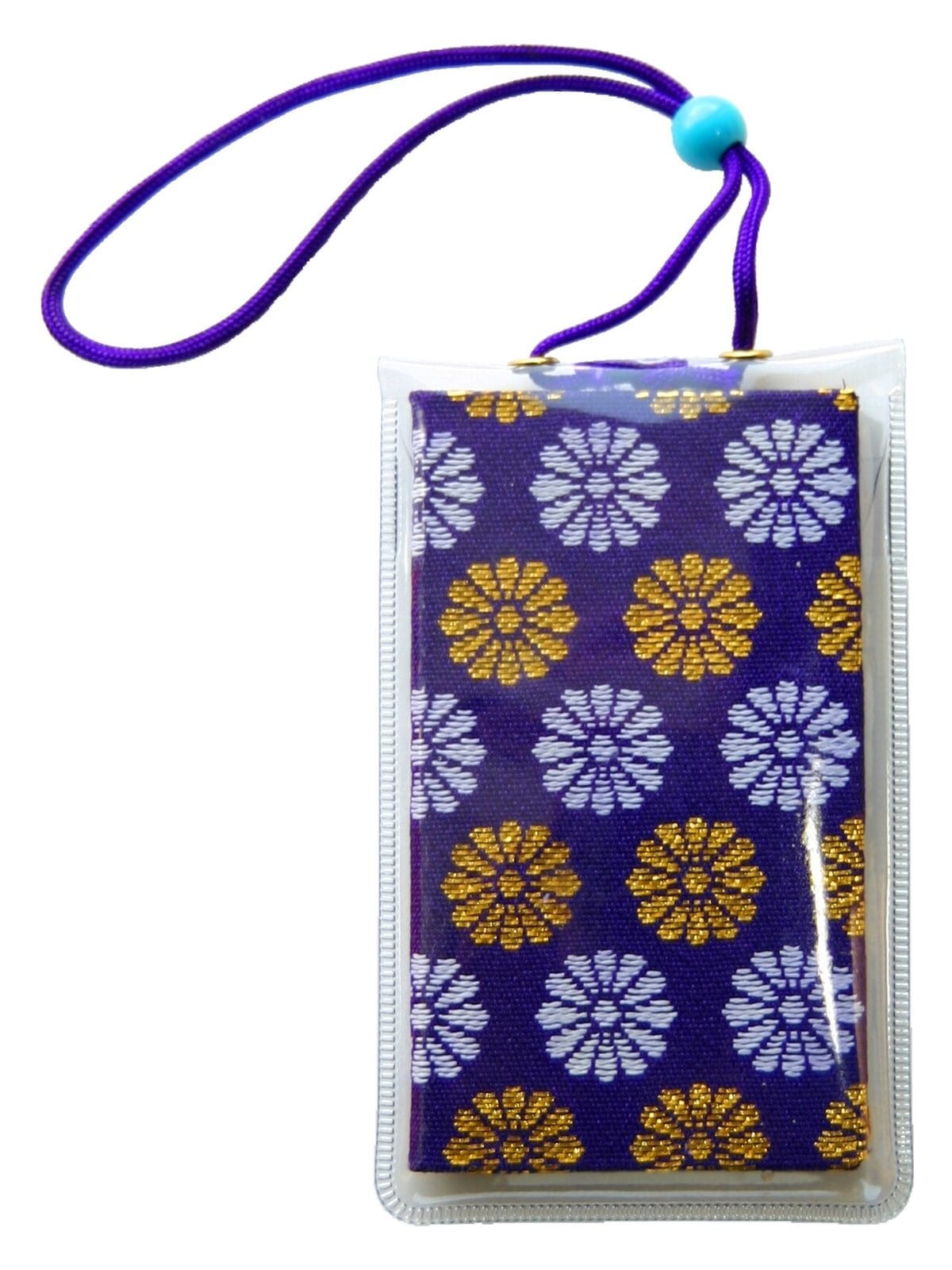
Photo: Timothy Takemoto / Wikimedia Commons (CC BY 2.0)
Getting a goshuin
Look for a sign saying 御朱印, or ask at the shrine or temple office (社務所, 寺務所 or 納経所). Prices vary — usually 300 to 500 yen, and special editions cost more.
Step by step
Visit and pray first. The goshuin is a record of a visit, so it comes after.
Have a goshuin book (goshuin-chō). They're sold at many shrines, temples and stationery shops.
Take off the book's cover or plastic sleeve and open it at the next blank page.
Hand it over with both hands and pay. You may get a number and be asked to wait.
Common mistakes
- Asking them to write in a diary, notebook or on loose paper.
- Treating it like a stamp rally and collecting without visiting the hall.
- Expecting one at every temple — Jōdo Shinshū temples, for example, usually don't give goshuin.
Good to know: When the writer is busy or away, many places offer a pre-written slip (kakioki) that you can glue into your book later.
Omamori charms
Small fabric charms for safe travel, health, study, love and more. You are “receiving” a blessing rather than buying a souvenir, though you pay at the counter.
Step by step
Choose the charm for what you wish for. Ask staff if the purpose isn't clear.
Receive it with both hands.
Keep it with you — in a bag or wallet. Don't open it.
After about a year, return it to a shrine or temple's box for old charms (kosatsu-osamejo).
Common mistakes
- Opening the pouch to see what's inside.
- Putting other rubbish into the box for old charms.
Omikuji fortunes
Step by step
Pay the small fee at the counter or the box beside it.
Shake the hexagonal box until a numbered stick comes out, and get the slip with that number — or simply pick a slip where that's the style.
Read your fortune. Some places have slips in English, Chinese or Korean.
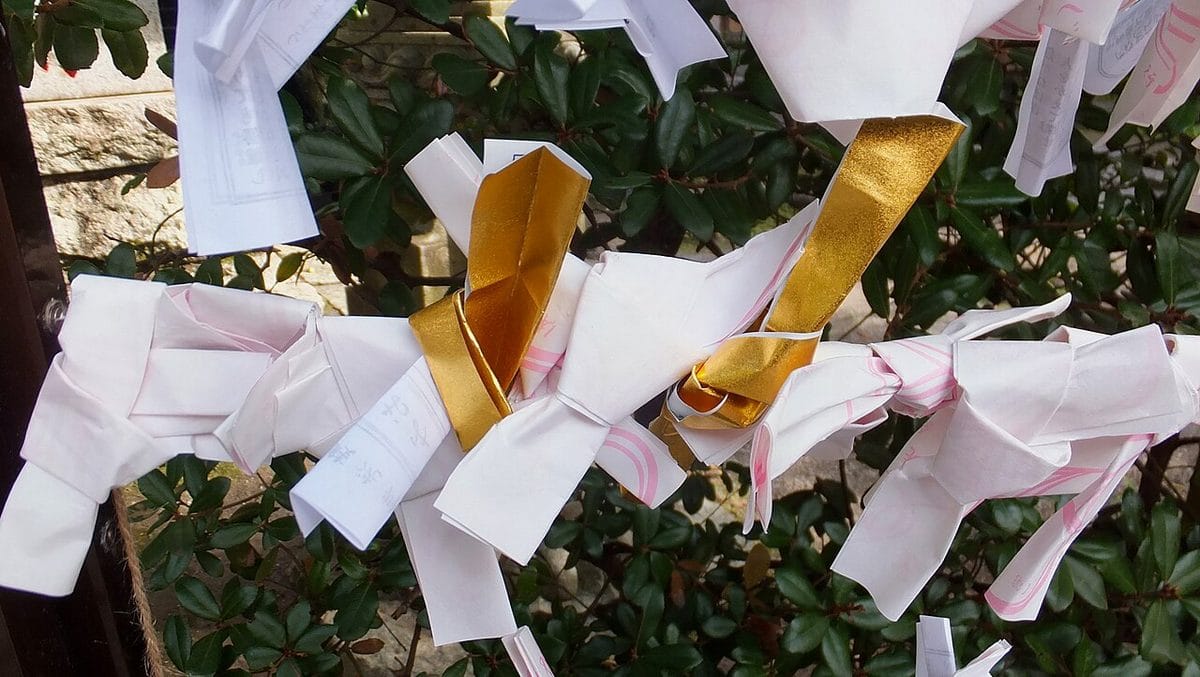
If it's bad luck, tie it to the rack or rope provided and leave it behind. Good luck can go home with you.
Common mistakes
- Tying slips to tree branches where a sign asks you to use the rack.
Sources
Sources (checked 2026-11-04). Facts, numbers and prices on this page come from these official pages.
- Ministry of Land, Infrastructure, Transport and TourismMultilingual explanatory text database: Goshuin(opens in a new tab)MLIT multilingual explanation database: goshuin (temple stamps)
- Ministry of Land, Infrastructure, Transport and TourismKoshinpu Nosatsusho, Box to Return Old Amulets(opens in a new tab)MLIT multilingual database: boxes for returning old amulets