Eating out
Vegetarian, halal & prayer rooms
Japanese cooking uses fish stock and small amounts of alcohol in places you might not expect, so a single word like “vegetarian” or “halal” is often not enough. Naming each ingredient works better, and a card in Japanese does that for you.
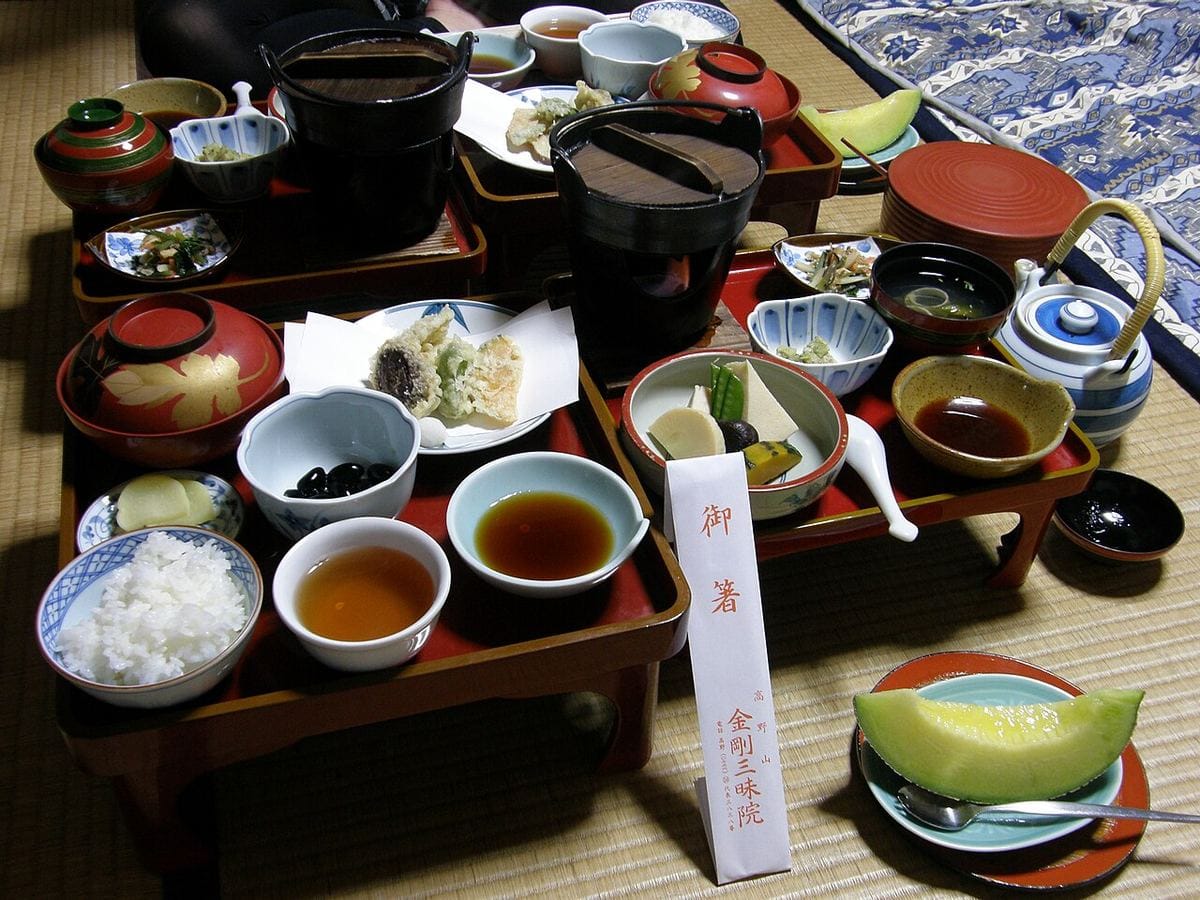
Photo: Szabolcs Arany / Wikimedia Commons (CC BY 2.0)
Telling the restaurant
Step by step
Before you order, show the line below to the staff — or open the food card for a fuller list.
Name each thing you don't eat: meat, fish, fish stock (dashi), egg, pork, alcohol.
Wait for the answer. If the staff aren't sure, they may check with the kitchen or suggest a different dish.
Common mistakes
- Saying only “vegetarian” — it is often understood as “no meat pieces”, with fish stock still in the soup.
Good to know: Asking when you book, or by phone before you go, gives the kitchen time to prepare.
Vegetarian and vegan
- Dashi stock is usually made from bonito (katsuo) flakes — it is in miso soup, noodle broth, simmered dishes and many sauces.
- Kelp stock (kombu dashi) has no fish. Some places can make dishes with it if you ask.
- Temple cuisine (shōjin ryōri) has no meat or fish. Some temples that offer lodging serve it.
- Specialist vegetarian and vegan restaurants are easiest to find in big cities.
Common mistakes
- Assuming a vegetable tempura or noodle dish has no fish — the dipping sauce or broth often does.
Halal
Japan has no single body that certifies halal food, so restaurants use different marks. Check what a “halal” or “Muslim-friendly” sign covers.
- Look for restaurants with halal certification, or ones that list their ingredients.
- Pork and lard turn up in ramen broth, dumplings and curry roux.
- Mirin (sweet rice wine) and cooking sake are common in sauces such as teriyaki.
- Ask about gelatine in desserts and gummies.
Common mistakes
- Taking “no pork” to mean “halal” — the meat and the seasonings may still not be.
Places to pray
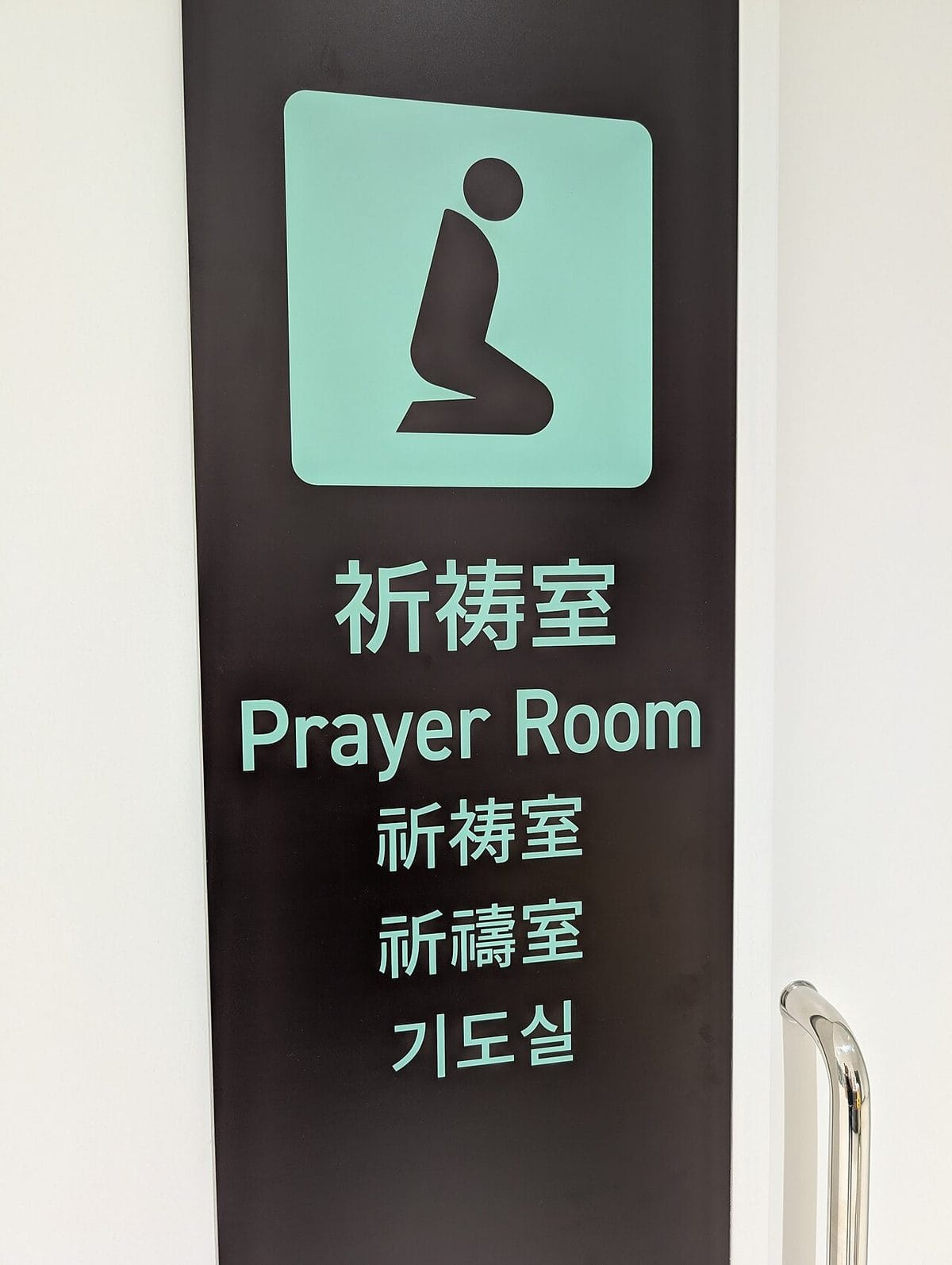
Prayer rooms are mostly in larger cities: major airports, some big stations, department stores and Muslim-friendly hotels.
Step by step
Ask at an information desk with the line below.
At the airport, look on the terminal map for a prayer room.
Keep a qibla (prayer direction) app on your phone for times you can't find a room.
Common mistakes
- Expecting a prayer room at every station — in smaller towns there usually isn't one.
Sources
Sources (checked 2026-11-05). Facts, numbers and prices on this page come from these official pages.
- Japan National Tourism Organization (JNTO)Muslim Travelers(opens in a new tab)JNTO: travel information for Muslim visitors
- Japan National Tourism Organization (JNTO)Vegetarian Guide(opens in a new tab)JNTO: guide to vegetarian food in Japan
 NextChopsticks